Rare Whisky Investment Guide 2025: Which Bottles Are Worth $10,000+
The rare whisky market has outperformed equities, fine wine and fine art in four of the last five years. If you are buying premium whisky in 2025, understanding value is as important as understanding taste. This is the definitive guide to whisky as investment.
Why Whisky Appreciates in Value
Whisky is a diminishing asset in a way few other collectibles are: every bottle opened permanently removes it from the investable supply, and every year that passes makes the remaining stock older and scarcer. Combined with genuinely limited annual production from the world's most sought-after distilleries, this creates the textbook conditions for long-term price appreciation — supply that can only shrink, against demand that has grown steadily for over a decade.
Closed Distillery Scotch
Bottles from distilleries that no longer exist represent the purest form of this scarcity. Port Ellen and Brora, both closed in 1983 and later revived only for extremely limited annual releases, have appreciated dramatically over the past decade — every bottle sold reduces a supply that can never be replenished at the original distillery. Port Ellen 38 Year Annual Release ($11,999.99) and Brora 40 Year Annual Release ($10,999.99) are current examples of exactly this dynamic in action.
Ghost Distillery Japanese Whisky
Karuizawa, closed in 2000, occupies the same category in Japanese whisky — a fixed, shrinking pool of remaining casks with zero possibility of new production. Karuizawa 1960 Single Cask ($44,999.99) shows what four decades of that finite supply commands today.
Active Distilleries With Investment-Grade Releases
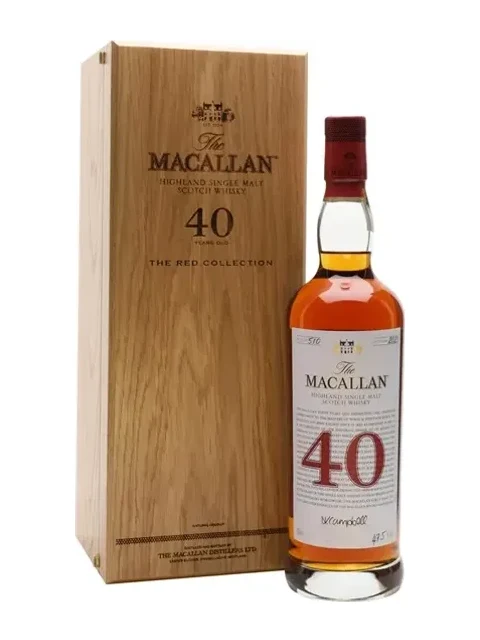
Not every investable bottle comes from a closed site. Macallan's extended-age releases, particularly anything 25 years or older, have a long track record of secondary-market appreciation even though the distillery remains fully active — scarcity here comes from genuinely limited barrel selection rather than a shuttered site. The Buffalo Trace Antique Collection, released annually in tightly limited quantities, functions similarly within American whiskey.
What to Actually Look For
The strongest investment candidates combine three things: a permanently limited or shrinking supply (closed distillery, discontinued expression, or genuinely tiny annual allocation), a distillery or brand with an established collector following, and verifiable provenance. Buying directly from a retailer with clear stock rather than an unverified secondary-market listing matters here — counterfeit rare whisky is a real and growing problem at the top of the market.
A Realistic Framing
Whisky investment works best as a long-term holding, not a short-term flip — the bottles that have appreciated most dramatically (Port Ellen, Brora, Karuizawa) did so over a decade or more, not months. Treat it the way you'd treat any illiquid collectible: buy what's genuinely scarce, hold patiently, and never invest money you might need back quickly.
Shop Luxury Whisky
Same-day delivery to 33 U.S. states and 7 Canadian provinces.
Browse Premium Collection