Bottled-in-Bond Explained: America's Oldest Consumer Protection Law
Bottled-in-Bond is the oldest consumer protection label in American spirits — a 19th-century law that still tells you exactly what's in the bottle today.
The 1897 Law That Still Matters
The Bottled-in-Bond Act was signed in 1897, decades before the FDA existed, in response to widespread whiskey adulteration — producers cutting spirit with anything from tobacco spit to iodine to fake the color and bite of aged whiskey. Congress created a federal guarantee: if a distillery followed the rules, the government would certify what was in the bottle.
What the Label Guarantees
To carry the Bottled-in-Bond label today, a whiskey must be the product of one distillation season at one distillery by one distiller, aged at least four years in a federally bonded warehouse under U.S. government supervision, and bottled at exactly 100 proof (50% ABV). It's one of the only labeling terms in American whiskey with real legal teeth behind it.
Bottled-in-Bond Worth Buying
E.H. Taylor Small Batch BiB — $49.99
Orange, sweet hay and tobacco at exactly 50% ABV — a tribute to Colonel E.H. Taylor, who personally lobbied Congress to pass the original 1897 law.
Rittenhouse Rye BiB — $29.99
Mint, vanilla and bold spice in one of the best-value bonded ryes on the market, aged a minimum of four years as the law requires.
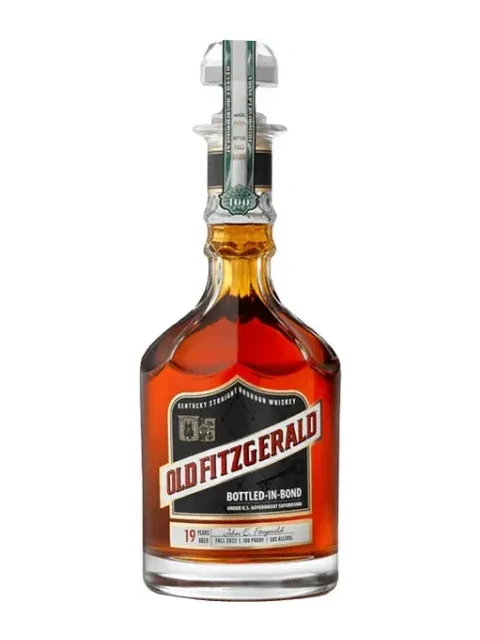
Old Fitzgerald 19 Year Bottled-in-Bond — $499.99
Vanilla, toasted oak and caramel in a wheated bourbon aged far beyond the four-year minimum — proof that Bottled-in-Bond isn't just an entry-level category.
How to Buy Bottled-in-Bond Whiskey Online
Caskworth carries Bottled-in-Bond bourbon and rye from everyday value bottles through rare aged releases, with same-day delivery to 33 U.S. states and 7 Canadian provinces on orders over $249.99.
Two E.H. Taylor Options
E.H. Taylor Small Batch Bottled-in-Bond ($49.99, 50% ABV) is the accessible entry point named for the historic Colonel E.H. Taylor Jr., the figure most associated with lobbying for the original Bottled-in-Bond Act. Colonel E.H. Taylor Single Barrel/Barrel Proof ($344, 50% ABV) steps up to single-barrel selection while still meeting the same bonded-spec requirements.