Japanese Whisky vs Scotch: A Complete Comparison for 2025
Japanese whisky and Scotch whisky compared — flavor, price and which to buy.
Origins
Scotch has been produced in Scotland for over 500 years. Japanese whisky is far younger, born in 1923 when Masataka Taketsuru founded the Yamazaki Distillery for Suntory after studying whisky-making in Scotland — which is exactly why Japanese production methods and equipment trace so directly back to Scottish tradition, despite the very different results in the glass.
Production Philosophy
Japanese distillers largely adopted Scottish methods and equipment, but two factors changed the outcome: Japan's climate accelerates aging compared to Scotland's cooler, more stable conditions, and the use of Mizunara oak — a rare, porous Japanese wood — creates sandalwood and incense flavors found nowhere in Scotch. Japanese distilleries also historically blended internally across their own sites rather than trading stock with competitors, the opposite of how Scotch blending houses like Johnnie Walker traditionally operate.
Flavor Profile, Side by Side
Japanese whisky tends to read more delicate, refined and fruity: Hibiki Harmony ($79.99) offers honey, white chocolate and citrus, while Yamazaki 12 Year ($149.99) leads with peach, pineapple and clove. Scotch covers a much wider range by comparison — Macallan 12 Double Cask ($74.99) brings sherry-driven vanilla and orange, while Lagavulin 16 Year ($79.99) delivers intense peat and iodine that has no real Japanese equivalent at a comparable price.
Direct Comparisons Worth Trying
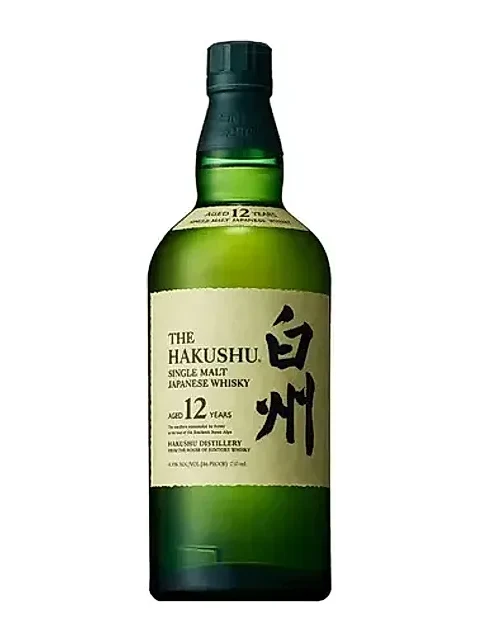
For sherry-cask lovers, comparing Yamazaki 12 Year against Macallan 12 Double Cask shows how the same cask influence reads differently through Japanese vs. Scottish base spirit. For blended whisky, Hibiki Harmony against a Scotch blend highlights how Suntory's five-cask approach (including plum liqueur casks) produces a genuinely different result than typical Scotch blending. Hakushu 12 Year ($149.99), with its fresh herb and green apple character, is the closest Japanese analogue to a lighter Highland or Speyside single malt.
Which Should You Buy First?
If you already love sherry-cask Scotch, Yamazaki 12 Year is the most natural bridge into Japanese whisky. If you want to understand the category's reputation for delicate, precise blending, start with Hibiki Harmony. Neither category is objectively better — they're related traditions that diverged into genuinely distinct styles worth exploring side by side rather than ranked against each other.