Monkey Shoulder Explained: Triple Malt Scotch for Cocktails
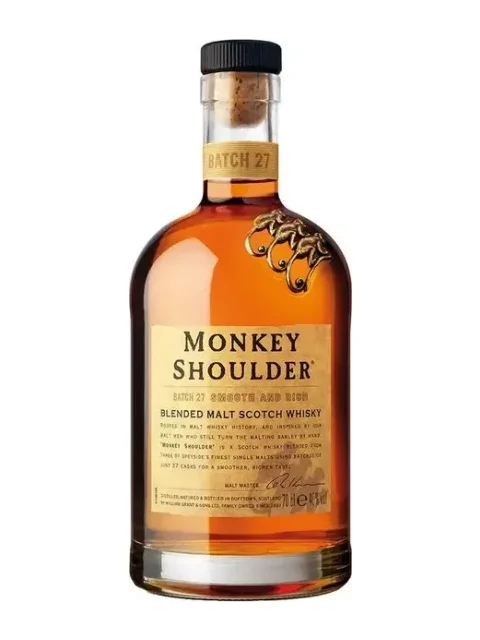
Most scotch is either a single malt from one distillery or a blend that includes cheaper grain whisky — Monkey Shoulder occupies the less common middle ground, a blended malt made entirely from single malts and built specifically with cocktails in mind.
What a Blended Malt Actually Is
A blended malt scotch (sometimes called a vatted malt) contains only single malt whiskies from multiple distilleries, with no grain whisky added — distinct from both a single malt (one distillery) and a standard blend (single malts plus grain whisky). Monkey Shoulder Blended Malt ($29.99, 40% ABV) is made by William Grant & Sons from three Speyside single malts, vatted together for a smooth, vanilla-and-spice profile with light fruit notes.
Built for Cocktails From the Start
Unlike most scotch, which is designed for sipping neat, Monkey Shoulder was specifically formulated to work in cocktails that traditionally call for bourbon or blended whiskey — an Old Fashioned, a whisky sour, or a Manhattan all take well to its smoother, less peaty profile compared to a typical single malt. That cocktail-first positioning is a major reason it's become a bartender staple rather than staying a niche category the way most blended malts have.
Why the Category Is Small
Blended malt scotch remains a small category compared to single malts and standard blends — most distilleries prefer to bottle their own single malt under their own name rather than vat it with whisky from a competing distillery. Monkey Shoulder's willingness to blend across William Grant & Sons' own Speyside distilleries (rather than reaching outside the company) is part of what makes it commercially viable in a way most blended malts aren't.
Who Monkey Shoulder Is For
If you regularly make whisky cocktails and have been using bourbon or a basic blend, Monkey Shoulder is worth trying specifically for that use case — it holds its own against mixers and ice better than a delicate single malt while still carrying genuine Speyside malt character. It's not designed to compete with an 12 Year single malt for sipping neat, and comparing it on those terms misses the point of what the whisky was built to do.