Cognac vs Brandy: What’s the Real Difference?
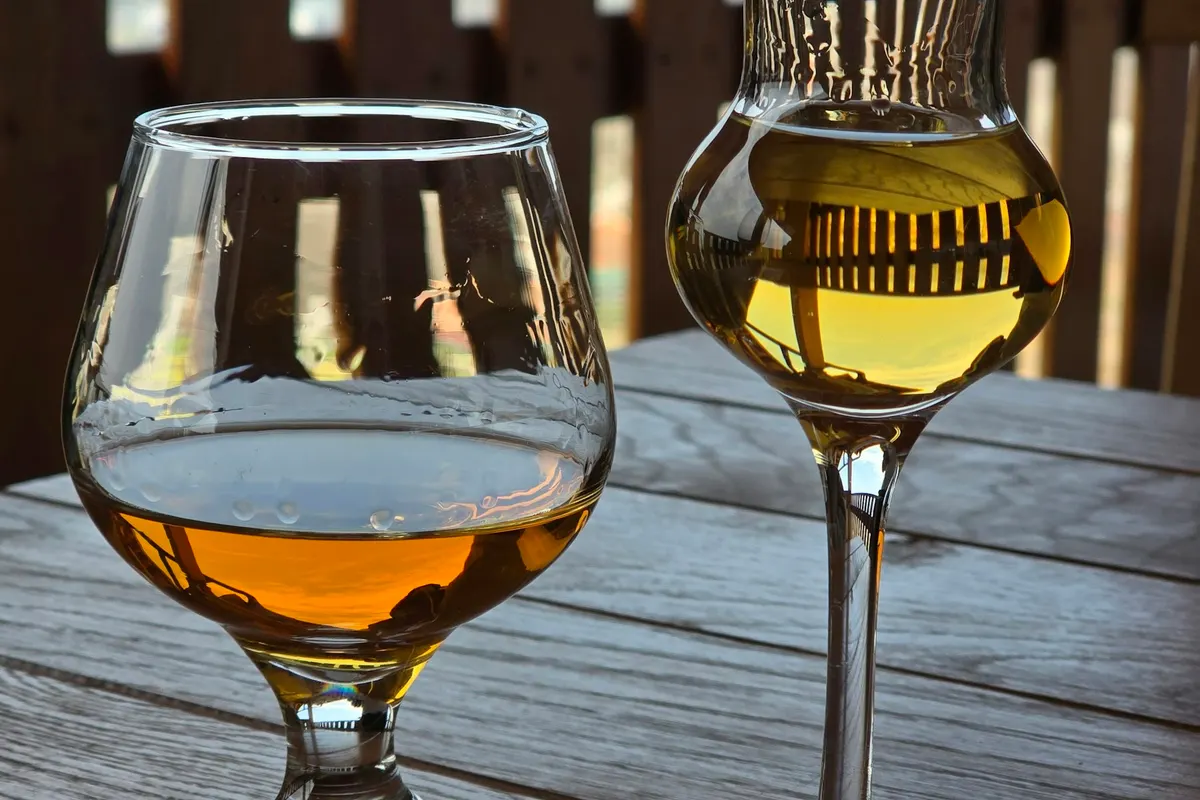
Cognac is a brandy, but only brandy made in the Cognac region of western France, from specific grapes, distilled twice in copper pot stills and aged at least two years in French oak can use the name. Brandy is the wider family: any spirit distilled from fermented fruit, most often grapes. Every cognac is a brandy; most brandy is not cognac.
Is Cognac Brandy? The Short Answer
Yes. Cognac is brandy in the same way that bourbon is whiskey. “Brandy” describes any spirit distilled from fermented fruit juice, and most of it is made from grapes. “Cognac” is a legally protected name for grape brandy from one place, made one way. So when people ask whether cognac and brandy are the same, the accurate answer is that cognac is a brandy, but most brandy is not cognac.
The strict rules are also why cognac usually costs more than everyday brandy. The name guarantees where the spirit came from, how it was distilled and how long it aged.
Cognac vs Brandy at a Glance
This table shows how cognac compares with its closest French relative, Armagnac, and with brandy in general.
| Cognac | Armagnac | Other brandy | |
|---|---|---|---|
| Where it’s from | Cognac region, western France | Gascony, southwest France | Anywhere: Spain, California, Peru, Normandy and more |
| Made from | White grapes, almost always Ugni Blanc | White grapes, several varieties | Grapes, apples or other fruit |
| Distillation | Twice, in copper pot stills | Usually once, in a column still | Pot or column still, depending on the maker |
| Minimum aging | 2 years in French oak | 2 years in oak | Varies widely; some is barely aged |
| Age labels | VS, VSOP, XO | VS, VSOP, XO and vintages | Varies by country and brand |
| Bottling strength | At least 40% ABV | At least 40% ABV | Commonly around 40% ABV |
What Makes Cognac Cognac
Five rules separate cognac from other brandy:
- Place. Cognac is a protected appellation, centred on the Charente and Charente-Maritime areas around the town of Cognac. The vineyards are divided into six growing areas, called crus: Grande Champagne, Petite Champagne, Borderies, Fins Bois, Bons Bois and Bois Ordinaires. (“Champagne” here refers to chalky soil, not the sparkling wine.)
- Grapes. Almost all cognac is made from Ugni Blanc, a high-acid white grape that makes thin, tart wine, which is exactly what distils well.
- Distillation. The wine is distilled twice in traditional copper pot stills known as Charentais stills.
- Aging. The clear spirit, called eau-de-vie, must age at least two years in French oak before it can be sold as cognac.
- Blending. Cognac houses blend eaux-de-vie of different ages and crus to keep a consistent house style from year to year.
The letters on a cognac label tell you the age of the youngest eau-de-vie in the blend:
| Label | Stands for | Youngest spirit in the blend |
|---|---|---|
| VS | Very Special | At least 2 years |
| VSOP | Very Superior Old Pale | At least 4 years |
| XO | Extra Old | At least 10 years |
For a deeper look at the three grades, see our guide to cognac grades: V.S. vs V.S.O.P vs X.O.
How Cognac Is Made, Step by Step
- Harvest and pressing. White grapes are picked in autumn and pressed quickly to keep the juice fresh.
- Fermentation. The juice ferments into a low-strength, high-acid wine of roughly 8% to 9% alcohol. No sugar or sulphur is added at this stage, because they would distort the spirit.
- First distillation. The wine goes through a copper pot still, producing a cloudy, low-strength liquid called brouillis.
- Second distillation. The brouillis is distilled again, and the distiller keeps only the middle “heart” of the run. The result is a clear eau-de-vie of roughly 70% alcohol. By rule, distillation must finish by the end of March following the harvest.
- Aging. The eau-de-vie rests in French oak barrels, slowly picking up colour, vanilla and spice, while a small amount evaporates each year (the “angel’s share”). Our guide to the angel’s share explains why that loss varies by climate.
- Blending and bottling. A cellar master blends eaux-de-vie of different ages and crus, then reduces the strength gradually with water to the final 40% or higher before bottling.
This process is what makes cognac a consistent, house-style product. A large house such as Hennessy blends dozens of eaux-de-vie into a single V.S, which is why bottles taste the same year after year.
Cognac vs Armagnac vs Brandy: How the Main Types Compare
Once you know cognac is a brandy, the next question is what the other brandies are. These are the main styles you will find on a shelf:
- Armagnac. Often described as France’s oldest brandy, Armagnac comes from Gascony and is usually distilled once in a column still. The result tends to be richer and more rustic than cognac. Try Tariquet V.S.O.P Armagnac or Delord 15 Year Armagnac, and read our Armagnac guide.
- Calvados. Apple (sometimes pear) brandy from Normandy. Christian Drouin Calvados V.S.O.P is a good place to start; see our Calvados guide.
- Spanish brandy. Smooth, often sweeter brandies from Spain, such as Torres 10 Year Brandy.
- American brandy. Mostly made in California, usually lighter in style. Christian Brothers V.S Brandy is a familiar example.
- Pisco and grappa. Pisco is a grape brandy from Peru and Chile. Grappa is made from the pressed skins and seeds left after winemaking, so it is sometimes called pomace brandy.
All of these are brandy. Only one of them is cognac. Our guide to cognac houses beyond the big four covers the smaller producers worth knowing.
Cognac vs Armagnac in More Detail
Because Armagnac is the closest comparison, it is worth looking at more closely. Armagnac comes from Gascony in southwest France, in three areas: Bas-Armagnac, Ténarèze and Haut-Armagnac. The spirit is usually distilled once through a continuous column still, which leaves more of the grape’s character in the spirit and gives a fuller, earthier style.
- Vintages are common. Armagnac is often bottled from a single harvest year, while cognac is usually a blend. A vintage Armagnac lets you taste one year in one place.
- Style. Cognac tends to be more polished and floral. Armagnac tends to taste of prune, dried apricot and spice.
- Price. Armagnac can offer older, more characterful bottles at lower prices than cognac of similar age. For example, Delord 15 Year Armagnac (from $79.99) carries a 15-year age statement with notes of prune, dried apricot and vanilla.
How to Read a Cognac or Brandy Label
Beyond V.S, V.S.O.P and X.O, a few other terms appear on cognac labels:
- Hors d’Âge. A grade used for very old blends, treated as at least the same age as an X.O.
- Fine Champagne. A blend of eaux-de-vie from the Grande Champagne and Petite Champagne crus, with at least half from Grande Champagne. Remy Martin V.S.O.P is sold as a Fine Champagne cognac.
- Grande Champagne. Made only from grapes grown in that single, most prestigious cru. Delamain Pale & Dry X.O is made entirely from Grande Champagne.
- Vintage (millesime). From a single harvest year. Rare for cognac and common for Armagnac.
For other brandies, labels vary by country. Spanish brandy such as Torres 10 Year Brandy is aged in American oak using the solera system, which blends older and younger spirits in stages. If a label has no region or age statement, treat it as an everyday brandy and judge it on taste.
How Cognac and Other Brandies Taste Different
Style varies by house and age, but some general patterns hold:
- Cognac usually leans floral and fruity, with notes of apricot, dried fruit, vanilla and oak. Double distillation in pot stills tends to give a refined, layered spirit.
- Armagnac tends to be bolder and earthier, with prune, spice and a more rustic edge.
- Everyday brandy is often simpler and sweeter, with more caramel and less complexity, which makes it easy to drink and useful for mixing and cooking.
Cognac vs Whiskey: How They Differ
Many people who enjoy whiskey wonder how cognac compares. The biggest difference is the base ingredient. Cognac is distilled from fermented grape juice, while whiskey is distilled from fermented grain. Both are aged in oak, which is why both can show vanilla and spice, but cognac tends toward fruit and flowers, and whiskey toward malt, grain and, in the case of bourbon, caramel. Cognac’s double distillation in pot stills and fixed minimum aging also differ from the many different production methods used for whiskey. If you are curious about whiskey styles, our guide to bourbon vs whiskey explains the rules on that side.
Which Should You Buy?
Match the bottle to how you plan to use it:
- Sipping on a budget: a V.S.O.P is the sweet spot. Options include Courvoisier V.S.O.P (from $49.99), Hennessy V.S.O.P Privilege (from $59.99) and Remy Martin V.S.O.P (from $54.99).
- Cocktails: a V.S or V.S.O.P cognac gives a cleaner result than cheap brandy. See our best cognac cocktails for recipes.
- A gift: an X.O such as Hennessy X.O or Courvoisier X.O carries the age and prestige people expect.
- Curious about the difference: pour a V.S.O.P cognac and a V.S.O.P Armagnac side by side. It is the quickest way to taste what region and distillation do.
Cognac is imported from France, so its price is affected by trade policy. Our explainer on US tariffs on cognac covers what has changed this year.
Common Myths About Cognac and Brandy
- “Brandy is just cheap cognac.” Not true. Brandy is a broad category, and Armagnac, Calvados and aged Spanish brandies can be as refined as cognac. They simply follow different rules.
- “Older is always better.” Older cognac is more complex and costs more, but a V.S.O.P is often the better choice for mixing or everyday sipping.
- “Cognac must be served in a large snifter.” A tulip-shaped glass concentrates aroma well, and many tasters prefer it to a wide snifter. Use whichever you enjoy.
- “Cognac is a sweet spirit.” It is not made sweet, although small, legally permitted adjustments such as caramel colouring and sugar are allowed to keep a house style consistent. Perceived sweetness mostly comes from fruit and oak.
Ready to Order?
Same-day delivery to 33 U.S. states. Minimum order $249.99 USD. Must be 21+ to purchase.
Shop Cognac